What if you could live in the San Fernando Valley and have your rental income help cover a big portion of your mortgage? Many Valley buyers are doing exactly that with practical house-hacking strategies that fit local rules and common loan programs. You want clarity on what is allowed, what it costs, and which option matches your timing and budget. In this guide, you will learn the three most workable paths in the Valley, the key regulations to check, and the financing basics that support each route. Let’s dive in.
What house hacking looks like in the Valley
The San Fernando Valley sits mostly inside the City of Los Angeles, with nearby cities like Burbank, Glendale, and San Fernando setting their own rules. That means local zoning, ADU permits, and renter protections can vary by address. Your plan should start with a quick rules check so you do not design a strategy that a city will not approve.
Buy a 2-4 unit and live in one
What it is: You purchase a duplex, triplex, or fourplex, occupy one unit as your primary residence, and rent the others. This classic model can offset a large share of your monthly payment.
Pros
- More rental doors per purchase compared to a single-family with an ADU.
- Many loan programs allow owner-occupied 2-4 unit financing, and some permit projected rent in qualifying. You can review FHA guidance on 1-4 unit owner-occupant financing through HUD’s single-family resources. See HUD’s overview of FHA Single Family policy updates at hud.gov.
Cons and watch-fors
- Underwriting can be more detailed. Expect reserve requirements, rental-income documentation, and a multi-unit appraisal process. Conventional loan specifics vary by product. You can confirm high-level rules in the Fannie Mae Selling Guide and with your lender.
- Local tenant protections can shape your cash flow. In the City of LA, some properties are covered by the Rent Stabilization Ordinance and Just Cause rules. Always confirm unit coverage through the Los Angeles Housing Department’s renter protections page at housing.lacity.gov.
Financing notes
- FHA can finance 2-4 unit primary residences for buyers who will occupy one unit and meet program rules. Start with HUD’s single-family resources at hud.gov.
- Conventional loan rules and rental-income treatment vary by product and lender. Reference the Fannie Mae Selling Guide for program context.
- VA-eligible buyers can use VA benefits for owner-occupied multi-unit purchases, subject to entitlement rules. See the VA’s program overview at benefits.va.gov.
Add or convert an ADU or JADU
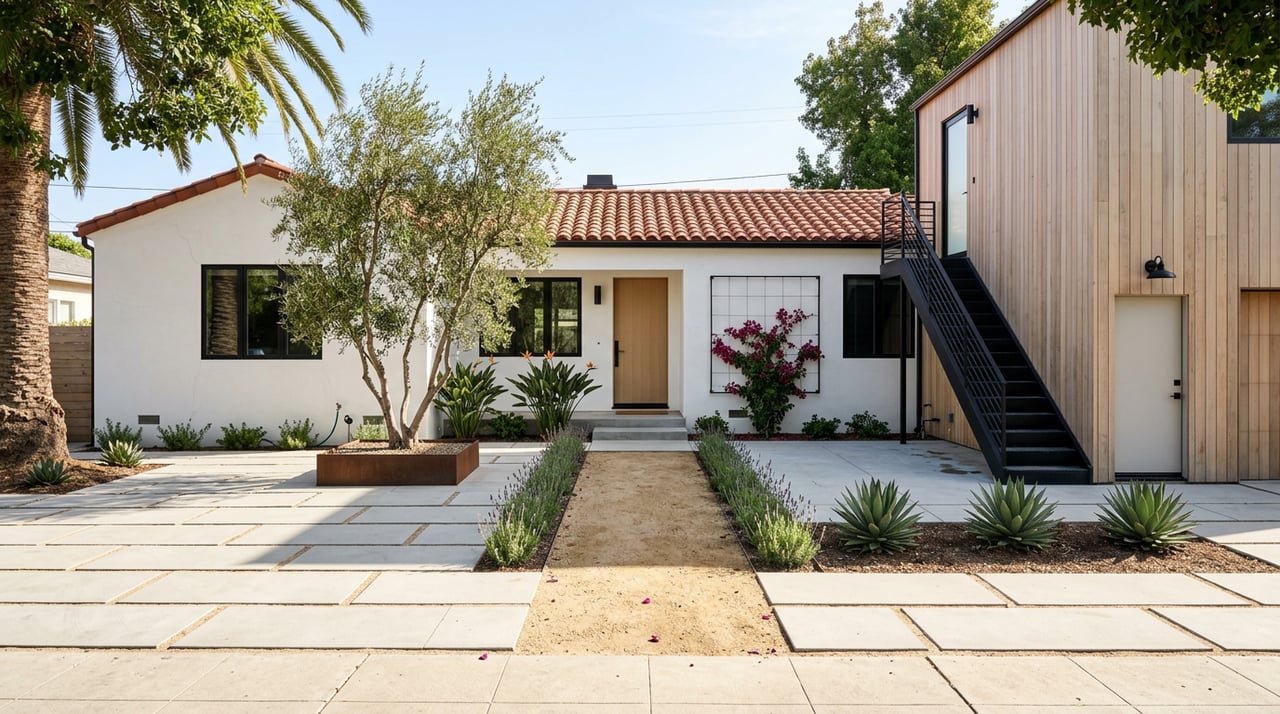
What it is: You create a second dwelling on the same lot as your primary home. That can be a detached ADU, an attached ADU, or a conversion of existing space. You can live in the main house and rent the ADU, or live in the ADU and rent the main home, depending on your goals and local rules.
Regulatory foundation
- California’s ADU law sets statewide rules that limit local barriers and require ministerial review timelines in many cases. HCD’s ADU Handbook explains key standards and updates. Review it at hcd.ca.gov.
- The City of Los Angeles has an ADU ordinance, ePlanLA submittals, and pre-approved plan sets that can streamline design and review. Explore permit pathways at the LADBS ADU page on dbs.lacity.gov.
- If you are in an HOA, California Civil Code 4751 prevents rules that effectively prohibit ADUs on single-family lots, though HOAs may enforce reasonable design standards. Read the statute text at law.justia.com.
Pros
- Often a lower total cost of entry than buying a multi-unit building already producing income.
- Strong flexibility. ADUs can serve renters, family, or caretakers. State law has eased many barriers, which helps more homeowners build. Learn the basics in HCD’s guidance at hcd.ca.gov.
Cons and watch-fors
- Construction budget, utility tie-ins, and timeline are the big variables. State law curbs some parking and fee hurdles, especially near transit, but local standards still apply. See state enforcement and policy context at hcd.ca.gov.
- ADU incentives change. Some programs, like the CalHFA ADU grant, have been fully allocated in past rounds. Always verify the current status at calhfa.ca.gov.
Financing notes
- Many owners fund ADUs with cash, a HELOC, a construction-to-permanent loan, or a renovation loan. FHA 203(k) or Fannie Mae renovation products can sometimes include ADU work if you meet program rules. Start with HUD’s FHA single-family resources at hud.gov and confirm specifics with your lender.
Rent a room or partial conversion
What it is: You rent a bedroom or a defined portion of your single-family home to a long-term tenant or roommate. It is the fastest, lowest-cost way to generate income.
Pros
- Minimal upfront cost and faster setup than building an ADU.
- You maintain control of the main home while adding steady income.
Cons and watch-fors
- Health and safety codes, lease compliance, and local renter protections still apply. For City of LA properties, review renter protections and Just Cause rules at housing.lacity.gov.
- If you add walls or convert space, check permitting needs. Some work can trigger building permits or create a unit that needs to meet dwelling standards. HCD’s ADU resources explain how local definitions may apply at hcd.ca.gov.
Financing paths at a glance
Choosing the right loan can make or break your numbers. These are common routes Valley house-hackers use. Always confirm current terms and eligibility with your lender.
- FHA for 1-4 units. FHA insures loans on owner-occupied 1-4 unit properties, subject to occupancy and program rules. Minimum down payment and mortgage insurance apply. Review FHA single-family resources at hud.gov.
- Conventional loans. Conforming loan limits influence how much you can borrow. The FHFA sets baseline and high-cost ceilings, and Los Angeles County is a high-cost market. See the 2026 limits announcement at fhfa.gov.
- VA for eligible buyers. VA-guaranteed loans can finance owner-occupied purchases, including some multi-unit properties, based on entitlement rules. Learn more at benefits.va.gov.
- Renovation and ADU funding. Owners often use HELOCs, construction loans, or renovation products to fund ADUs. State or local incentives change over time. Check current program status at calhfa.ca.gov.
- County loan limits matter. Limits vary by unit count and loan type, which is crucial for 2-4 unit deals. Verify applicable FHA limits for Los Angeles County and your unit count in HUD’s dataset at apps.hud.gov.
Valley-specific rules to check first
Zoning and overlays
Before you model rents or pick finishes, confirm what the property allows. In the City of LA, use ZIMAS to check zoning, overlays, and whether the site is inside City boundaries. Start with the zoning lookup at zimas.lacity.org. If the property is in Burbank, Glendale, or the City of San Fernando, confirm rules on that city’s planning site.
ADU permit standards
Los Angeles has defined ADU development standards and a permit path through LADBS, including pre-approved plan sets that can shorten design time. Review requirements and submittal options at dbs.lacity.gov. State law supports ministerial approval timelines in many cases. See HCD’s guidance at hcd.ca.gov.
HOA CC&Rs
If the property is in an HOA, Civil Code 4751 limits HOA rules that would block ADUs on single-family lots. HOAs can still apply reasonable aesthetic standards. Read the statute at law.justia.com.
Renter protections and rent rules
The City of LA’s RSO and Just Cause protections can affect rent increases, move-out procedures, relocation costs, and registration. ADUs and new units may also have specific treatment under local or state law. Review current coverage and rules at housing.lacity.gov.
Parking, impact fees, and fire or hillside constraints
State ADU law reduces some parking requirements near transit and limits certain replacement-parking mandates. Fire-hazard or hillside overlays can add constraints and conditions. For state policy context and enforcement information, visit HCD’s page at hcd.ca.gov.
Unit legality and lending
Most lenders require rental units to be legal and permitted. Unpermitted units can complicate underwriting and may not count as qualifying income. Review FHA resources at hud.gov and confirm requirements with your lender.
Insurance and taxes
Adding a rental unit changes your insurance needs and tax reporting. Speak with an insurance agent and a CPA so you plan for coverage, depreciation, and documentation from day one.
Step-by-step plan to start
- Identify 1-2 focus neighborhoods and target parcel types. If inside the City of LA, run a quick zoning and overlay check through ZIMAS.
- If you are in an HOA, pull CC&Rs and review California Civil Code 4751 with your HOA or real estate counsel. See the statute at law.justia.com.
- Speak with 2-3 local lenders who do FHA, conventional 2-4 unit, VA, and ADU or renovation financing. Ask how they treat projected rent, reserves, and occupancy timelines. Confirm FHA county limits by unit count at apps.hud.gov and conventional conforming context at fhfa.gov.
- If building an ADU, review LADBS checklists and pre-approved plans to reduce design time and cost. Start with the ADU portal at dbs.lacity.gov. Request a permit-fee estimate and ask about any incentives.
- Confirm renter-protection coverage and registration needs for your units through the City at housing.lacity.gov.
- For any build or conversion, get 2-3 contractor bids, include a 10-20 percent contingency, and coordinate the lender’s draw schedule before you sign.
- Speak with a CPA about rental income, expenses, and the differences between living in the main home or the ADU so you structure your plan correctly.
Is house hacking right for you?
If you want to reduce your cost of living and start building long-term equity, house hacking can be a practical path in the Valley. The right fit depends on your timeline and risk tolerance. A 2-4 unit purchase may produce income faster but involves tenant rules and multi-unit underwriting. An ADU can create flexible value on a single-family lot but requires time, permits, and construction cash flow. Renting a room can start immediately if you are comfortable sharing space and following local renter protections.
A smart approach is to compare two scenarios side by side: a 2-4 unit purchase you can qualify for now versus a single-family home with an ADU plan you can fund over the next 12 to 18 months. Layer in your financing options, confirm the local rules for the exact parcel, and let the numbers guide your choice.
Ready to explore a house-hack that fits your goals in the San Fernando Valley? Connect with the Kramer Cruz Group for property sourcing, local rule checks, and a clear plan from offer to move-in. Reach out to Lorraine Cruz to schedule a consultation and get a tailored strategy.
FAQs
What is an ADU and how is it approved in Los Angeles?
- An ADU is a secondary dwelling on the same lot as a primary residence, reviewed under state-supported, ministerial processes that limit certain local barriers. See HCD’s ADU guidance at hcd.ca.gov and the City’s permit pathway at dbs.lacity.gov.
How do I check if my Valley property is in the City of LA and what it is zoned for?
- Use the City’s ZIMAS tool to confirm jurisdiction, zoning, and overlays by address, then verify any rules with the appropriate city planning department. Start at zimas.lacity.org.
Are ADUs or multi-unit properties in Los Angeles subject to rent control or Just Cause rules?
- Some properties are covered by the City’s Rent Stabilization Ordinance or Just Cause protections, and coverage can vary by unit type and year built; always confirm current rules at housing.lacity.gov.
Can I use FHA or VA to buy a duplex, triplex, or fourplex if I live in one unit?
- Yes, FHA and VA have pathways for owner-occupants of 2-4 unit properties if you meet occupancy and program rules; review FHA at hud.gov and VA at benefits.va.gov.
What are the current loan limits for Los Angeles County and how do they affect 2-4 unit deals?
- Conforming and FHA limits vary by unit count and are higher for 2-4 units; see FHFA’s 2026 conforming limits at fhfa.gov and verify FHA county limits at apps.hud.gov.
Do HOAs allow ADUs in the San Fernando Valley?
- California Civil Code 4751 prevents HOA rules that effectively ban ADUs on single-family lots, but HOAs may apply reasonable design standards; review the statute at law.justia.com.
Will a lender count rent from an unpermitted unit on a loan application?
- Lenders generally require legal, permitted units for rental income to be used in underwriting; unpermitted units can cause issues. See FHA resources at hud.gov and confirm specifics with your lender.