Choosing Between New and Older Homes in the San Fernando Valley
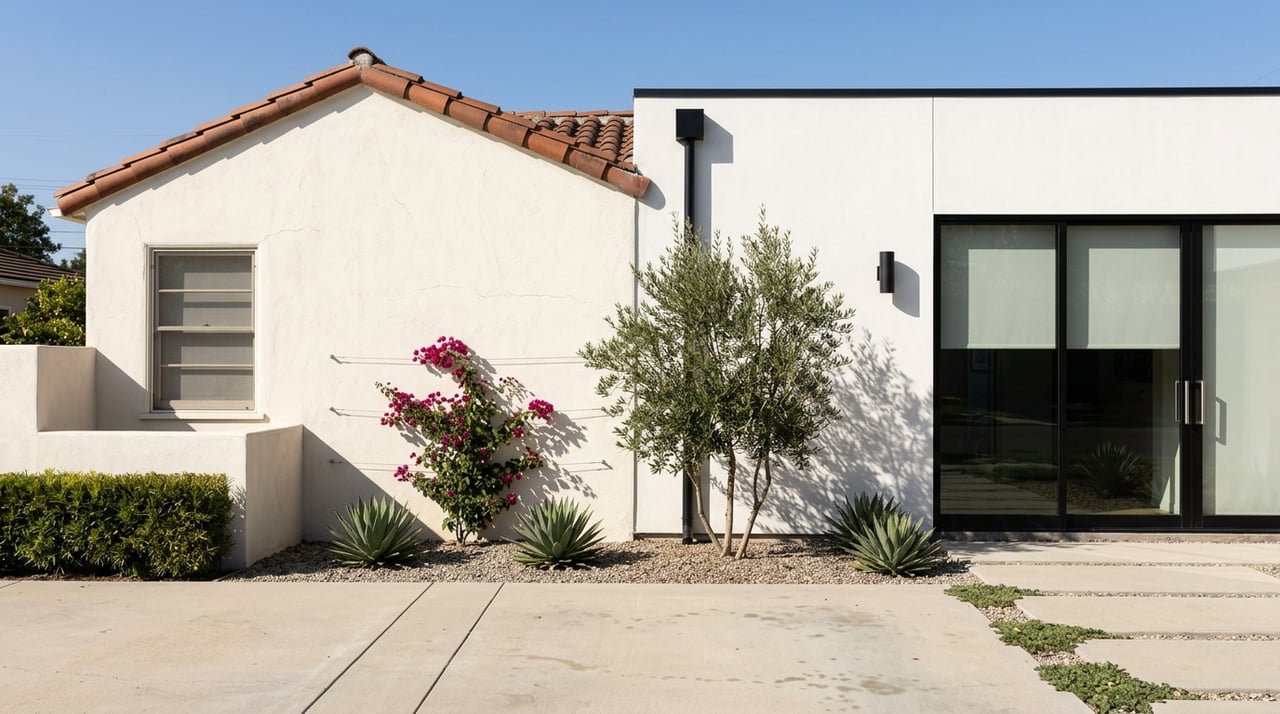
Wondering whether a brand-new home or a classic older property makes more sense in the San Fernando Valley? You are not alone. For many buyers, the choice comes down to lifestyle, maintenance, flexibility, and how you want your home to feel day to day. This guide will help you compare the trade-offs, ask smarter questions, and focus on what matters most as you shop in Los Angeles County. Let’s dive in.
The San Fernando Valley is not one uniform housing market. It is a mix of neighborhood patterns, home styles, and ownership structures that can feel very different from one area to the next.
For example, a Los Angeles City planning profile for Sherman Oaks, Studio City, Toluca Lake, and Cahuenga Pass shows a mix of single-family and multiple-unit housing, with 37.5% single housing units and 62.4% multiple housing units. In contrast, Valley Village’s historic district is described as a low-density single-family tract developed between 1937 and 1953, with modest lots, mature sycamore trees, side driveways, and homes in styles like Ranch and Minimal Traditional.
That matters because “new construction vs. older homes” in the Valley is rarely a simple side-by-side comparison. According to Los Angeles planning materials, by 1954, most new single-family homes in Los Angeles were being built in the San Fernando Valley, while today many newer homes arrive as infill projects on vacant or underused parcels within existing urban areas. In practical terms, that often means newer homes may come as teardowns, rebuilds, or small-lot developments rather than large, master-planned subdivisions.
If you want a home with a more current code baseline, new construction can be appealing. In California, the 2025 Energy Code, effective January 1, 2026, applies to new buildings and major renovations and is designed to improve efficiency through features like heat pumps, stronger wall and window performance, smarter controls, and electric-ready systems.
For you as a buyer, that usually means fewer legacy decisions on major systems at closing. You may start with newer windows, updated insulation standards, and systems designed around current energy rules rather than decades-old materials or equipment.
New construction can also feel simpler from a maintenance standpoint in the early years. Systems, finishes, and appliances are often newer from day one, which may reduce the chance that you are immediately budgeting for a roof, HVAC replacement, or water heater update.
In the Valley, many newer homes are tied to common interest developments. The California Department of Real Estate explains that when you buy a home, townhouse, condominium, or lot in a common interest development, membership in the association is automatic, and CC&Rs and HOA governance help define assessments, insurance responsibilities, maintenance duties, and architectural control.
That structure can be helpful if you prefer a more managed ownership experience. But it can also mean monthly dues, exterior design restrictions, and the possibility of special assessments for large repairs or unexpected costs.
If customization is high on your list, look closely at the ownership structure. In HOA-managed communities, exterior changes are often reviewed by an architectural committee, which can limit what you can alter on the outside of the home or in shared spaces.
That does not mean a new home is the wrong fit. It simply means you should compare convenience against control and decide which matters more to you.
Older homes in the San Fernando Valley tend to win buyers over with character and setting. In areas like Valley Village, Los Angeles planners describe homes from the late 1930s through early 1950s in styles such as Ranch, Minimal Traditional, Colonial Revival, and Tudor Revival, often paired with mature trees, open front lawns, and a traditional suburban layout.
That sense of place is a big part of the appeal. Established landscaping, original architectural details, and older tract layouts can create a look and feel that is hard to replicate in newer infill development.
Older housing also remains a large part of the Valley’s housing stock. A Valley planning profile cited in the research shows that 10.4% of homes were built in the 1940s, 16.1% in the 1950s, 16.2% in the 1960s, 14.9% in the 1970s, and 14.3% in the 1980s, while only 2.1% were built in 2014 or later. If you are shopping in the Valley, chances are high that many of the homes you tour will be older rather than brand new.
With older homes, the conversation usually shifts from style to condition. The U.S. Census Bureau notes that housing characteristics vary significantly by year built, and newer homes tend to include more amenities and safety equipment than older homes.
You should also be aware of lead-related considerations. The EPA says homes built before 1978 may contain lead-based paint, and the older the home, the more likely that becomes. The agency reports that 87% of homes built before 1940 and 24% of homes built from 1960 to 1978 contain some lead-based paint, according to Census research on housing by year built.
If lead-related work becomes part of your transaction or renovation plans, California has additional requirements. The California Department of Public Health states that paid lead inspections, risk assessments, and clearance inspections must be performed by a CDPH LRC-certified Inspector/Assessor.
When you are choosing between new construction and an older home, it helps to separate the decision into a few practical categories.
| Category | New Construction | Older Homes |
|---|---|---|
| Systems | Often built to current energy standards and newer code baseline | May require closer review of roof, HVAC, plumbing, electrical, and sewer |
| Style | Cleaner, more current finishes in many cases | More architectural character and original design details |
| Lot pattern | Often infill, rebuild, or small-lot development | May have earlier tract layouts and more established landscaping |
| Ownership | Commonly tied to HOA or CID rules | Often more exterior flexibility if not in an HOA |
| Upkeep | Fewer immediate replacement questions in many cases | More age-related repair and maintenance questions |
The right answer depends on what you value most. If you want predictability and a more current systems baseline, new construction may feel easier. If you care more about character, mature surroundings, and the possibility of greater flexibility, an older home may be the better fit.
Whether you are touring a new build or a mid-century Valley home, the best buyers ask detailed questions early. That helps you avoid surprises and compare homes more clearly.
According to California jury instructions describing a broker’s visual inspection duty, that review is limited to reasonably accessible areas and does not include public records or permit research. That is why smart showing questions matter so much.
For any home, ask about:
These questions are especially important with older homes, but they also matter in newer homes if the property includes upgrades, builder options, or prior owner changes.
If a home has additions, remodels, or converted spaces, ask whether the work was permitted and finaled. Since a broker’s visual inspection does not cover permit verification, this is a key step in your due diligence.
For new construction, ask what is standard and what counts as an upgrade. Two homes in the same development can look similar at first glance but differ meaningfully in finishes, systems, or included features.
If the property is in an HOA, ask:
These answers can affect your monthly costs, your maintenance obligations, and how much freedom you have to change the property over time.
A general home inspection is important, but it is often just the starting point. If concerns come up, you may need the right licensed professional for deeper evaluation.
The California Contractors State License Board advises consumers to verify a contractor’s license, bond, insurance, and business information before hiring. In practice, that means inspection findings should guide your next steps, not replace specialist review when an issue appears more complex.
For example, if an inspector raises concerns about electrical, roofing, plumbing, or foundation-related items, the next move may be a licensed contractor or engineer. If lead-related inspection work is needed, California requires the appropriate CDPH-certified professional.
If you like clean lines, current systems, and a more predictable maintenance starting point, new construction may be your best match. Just make sure you are comfortable with HOA governance, design rules, and the lot or layout that comes with infill development.
If you are drawn to architectural character, mature trees, and a more established neighborhood feel, an older Valley home may offer the setting you want. You will likely need a more detailed review of condition, materials, and prior improvements, but that extra work can be worth it if the home fits your lifestyle and long-term plans.
In the end, this is less about which option is “better” and more about which trade-offs fit you best. If you want thoughtful guidance as you compare San Fernando Valley homes, connect with Lorraine Cruz for a personalized, relationship-first approach to your move.



Whether you're in the research phase at the beginning of your real estate search or you know exactly what you're looking for, you'll benefit from having a real estate professional by your side. She'd be honored to put her real estate experience to work for you.