San Fernando Valley Multifamily Investing Opportunities
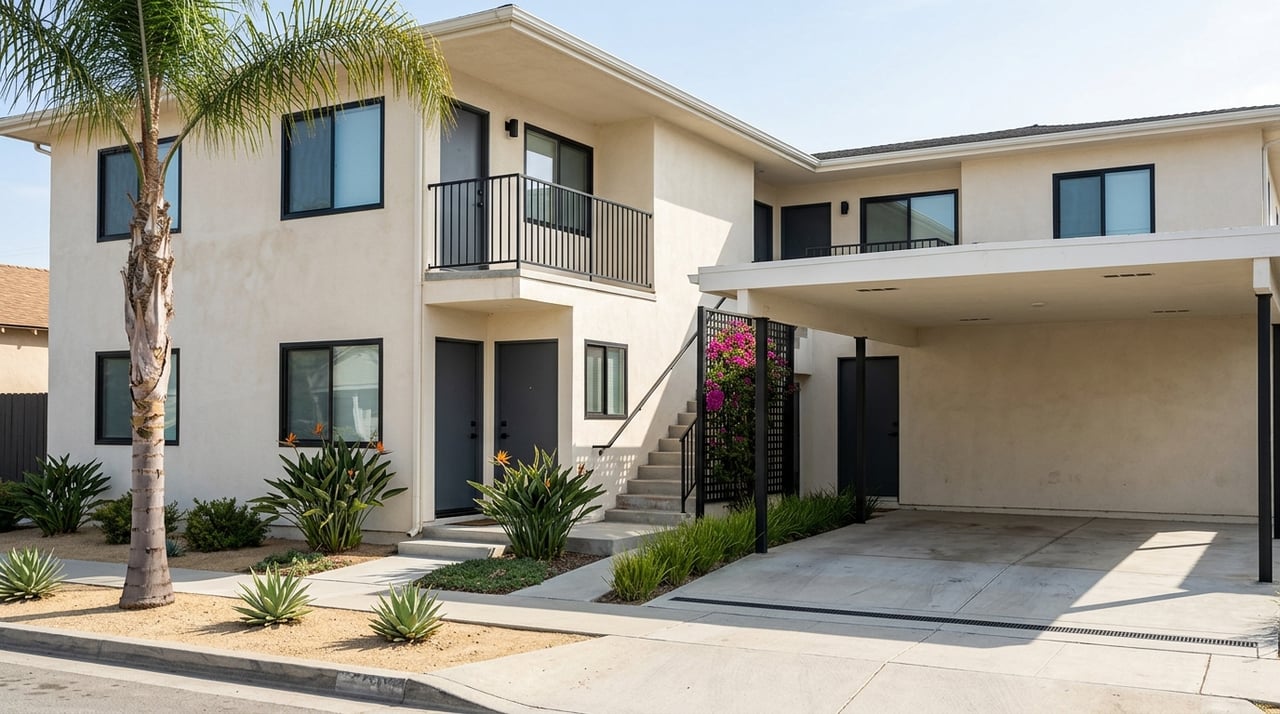
If you have been looking at small multifamily property in the San Fernando Valley, you have probably noticed how quickly a deal can go from promising to complicated. A duplex, triplex, or fourplex might look straightforward on paper, but the numbers can shift fast depending on rents, local rules, parking, and the exact city block. The good news is that with the right framework, you can spot opportunities more clearly and avoid costly assumptions. Let’s dive in.
The San Fernando Valley is not just a single-family market. A useful Census proxy for the area shows about 1.81 million people, 645,329 households, and a housing mix where roughly 53% of occupied units are renter occupied. That matters if you are exploring small multifamily because renter demand is a meaningful part of the Valley housing picture.
The same data shows that 95% of units are occupied, which points to a generally active housing environment. For buyers, that creates a practical backdrop for duplexes, triplexes, fourplexes, and smaller apartment buildings in many Valley corridors. It also helps explain why these properties appeal to both first-time investors and buyers who want to live in one unit and rent out the others.
One of the biggest mistakes you can make is treating the entire San Fernando Valley like one uniform market. It is a large Los Angeles County region that includes the Valley portion of Los Angeles along with incorporated cities such as Burbank, Calabasas, Glendale, Hidden Hills, and San Fernando. That means similar buildings can perform very differently based on jurisdiction, building age, and local rules.
This is especially important when you compare an older duplex in the City of Los Angeles with a similar property in an incorporated Valley city or an unincorporated pocket of Los Angeles County. Rent restrictions, tenant protections, and value-add options may not line up the same way. Before you focus on finishes or projected rent growth, you need to confirm exactly where the property sits.
Recent multifamily research for the broader San Fernando Valley placed asking rents at about $2,246 per month, vacancy at 3.3%, median sale price at $314,000 per unit, and average cap rates around 5.0% to 5.5%. The same report noted that about 1,000 units were delivered in 2025, roughly 2,000 were under construction, and first-half sales were up 17% from the prior year.
That gives you a useful market frame. Demand has remained active, vacancies are relatively tight, and transaction volume has shown movement. At the same time, the report noted that many of the properties trading were older vintages in lower property tiers, which supports the idea that many Valley opportunities today are value-add rather than brand-new product plays.
Los Angeles has a high cost-to-buy premium compared with renting, with homeownership costing nearly 2.5 times average rent according to CBRE. In simple terms, buying can be expensive even when you have strong income and a long-term plan. That is one reason small multifamily remains attractive for owner-occupants.
If you live in one unit and rent out the others, the rental income may help offset your monthly housing costs. That does not make every deal a good deal, but it does make the strategy worth a closer look in a market where purchase costs are high. The key is to run the numbers conservatively instead of assuming the property will carry itself right away.
You do not need to overcomplicate underwriting to make a better decision. At the property level, the core question is simple: can the building pay its bills and still support the loan? That is the practical meaning behind metrics like net cash flow, debt service, cap rate, and debt service coverage ratio.
When you review a small multifamily opportunity, focus on a few basics:
A pretty renovation package or a polished listing description should never replace this math. If the numbers only work when everything goes perfectly, the deal may be too thin.
In the San Fernando Valley, practicality matters. Census data shows that 65% of workers drive alone and the mean commute time is 30.3 minutes, so parking and access can play a major role in tenant appeal. For many renters, convenience matters just as much as upgraded countertops.
Recent market research also pointed to active sales along the 101 corridor and near Northridge. That does not mean every property in those areas is a fit, but it does reinforce the value of focusing on location fundamentals such as commute access, parking layout, and day-to-day usability.
Many of the more interesting small multifamily opportunities in the Valley are not dramatic transformation stories. They are often older properties with solid bones, functional layouts, and room for improvement through manageable upgrades. In this market, value-add often comes from improving functionality and compliance rather than chasing luxury finishes.
Common areas of upside may include:
That last point deserves caution. ADUs and JADUs can create future flexibility, and California says these units can be detached, attached, or created from existing space, with ministerial approval in many cases. Still, ADU income should be treated as possible upside, not automatic value.
This is where many buyers get surprised. In the City of Los Angeles, the Rent Stabilization Ordinance generally covers rental properties built on or before October 1, 1978, including apartments, duplexes, two or more single-family units on the same parcel, and certain ADU or JADU situations. The current allowable annual increase shown by LAHD is 3% for July 1, 2025 through June 30, 2026.
If a property is not covered by the RSO, the City’s Just Cause Ordinance can still affect how tenancies are handled. That means you cannot simply assume that non-RSO equals unlimited flexibility. Local filing and tenant protection rules still matter.
In unincorporated Los Angeles County, the County’s Rent Stabilization Program oversees local rent stabilization, tenant protections, a rent registry, and a just-cause framework for eligible properties. State law also remains the backstop through California’s Tenant Protection Act, which caps annual rent increases for many covered units at 5% plus inflation, or 10% total, whichever is lower.
Because the Valley crosses multiple jurisdictions, your first due diligence step should be confirming the exact address and governing rules. You want to know whether the property is in the City of Los Angeles, an incorporated Valley city, or an unincorporated County area. That single detail can affect your rent growth assumptions, operating strategy, and long-term plan.
From there, verify the building’s age, review any possible exemptions, compare the current rent roll with applicable rules, and check permit history. If you are counting on improvements to increase value, make sure the work is legal, financeable, and realistically executable. In this market, the best deals often combine stable tenancy, manageable repairs, and sensible upside.
When you are choosing between two small multifamily options, it helps to compare them through a simple lens:
| Factor | What to Look For |
|---|---|
| Jurisdiction | City of Los Angeles, incorporated city, or unincorporated County |
| Building vintage | Whether age affects rent rules or exemptions |
| Rent roll | Current rents versus legal increase limits |
| Parking | Sufficient, practical, and tenant-friendly setup |
| Condition | Functional systems and manageable repair scope |
| Permit history | Clear records for past work and future plans |
| Upside | Realistic improvements, not speculative projections |
This kind of side-by-side review can help you stay disciplined. It also makes it easier to spot the difference between a property that is merely interesting and one that may truly fit your goals.
The San Fernando Valley offers real small multifamily opportunity, but it rewards careful buyers. Strong renter presence, relatively tight vacancy, and ongoing transaction activity all support the case for duplexes, triplexes, fourplexes, and older value-add properties. Still, the details matter a great deal here.
If you want to buy well, focus on local rules, property function, realistic cash flow, and legal upside. A good deal in this market is usually not about hype. It is about clear numbers, careful due diligence, and a strategy that fits both the property and the jurisdiction.
If you are exploring small multifamily opportunities in Los Angeles County and want a thoughtful, data-driven approach, connect with Lorraine Cruz for guidance tailored to your goals.


Whether you're in the research phase at the beginning of your real estate search or you know exactly what you're looking for, you'll benefit from having a real estate professional by your side. She'd be honored to put her real estate experience to work for you.